
Quick Answer: A Japandi kitchen combines Japanese simplicity with Scandinavian warmth to create a space that is clean, functional, natural, and inviting. This design style emphasizes minimal clutter, natural materials, neutral colors, craftsmanship, and purposeful living, making it one of the most popular trends in modern minimalist kitchen design.
What Is a Japandi Kitchen?
A Japandi kitchen blends two design philosophies:
- Japanese design: Simplicity, balance, natural materials, and mindfulness.
- Scandinavian design: Functionality, comfort, light-filled spaces, and practicality.
Together, they create a kitchen that feels peaceful, organized, and timeless.
Unlike traditional minimalist kitchens that can sometimes feel cold or sterile, Japandi kitchens add warmth through wood, texture, and handcrafted details.
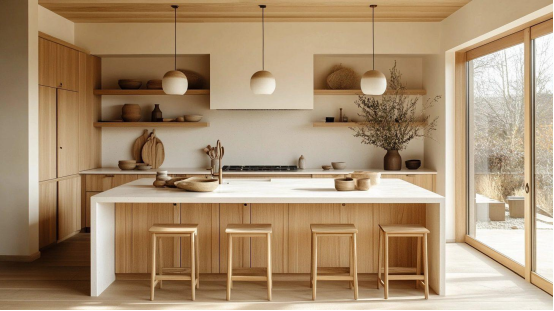
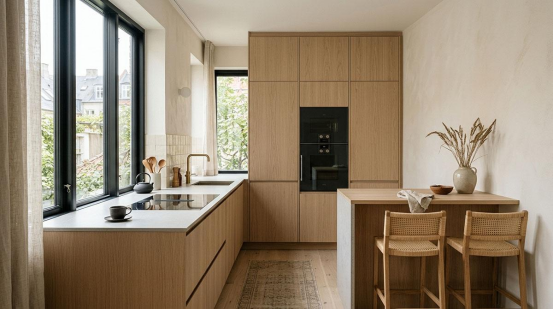
The goal is simple:
Create a kitchen where every element serves a purpose while maintaining beauty and harmony.
Why Are Japandi Kitchens So Popular?
Many homeowners are moving away from overly decorative spaces and embracing designs that promote calm and functionality.
A Japandi kitchen offers:
- A clutter-free environment
- Timeless style that won’t quickly go out of fashion
- Better organization
- Natural materials and sustainable choices
- A warm and welcoming atmosphere
- Improved focus on quality over quantity
In today’s fast-paced world, a kitchen that feels peaceful and organized has become more desirable than ever.
Key Characteristics of Japandi Style Kitchens
Understanding these core elements will help you create an authentic Japandi space.
1. Natural Materials
Natural materials are at the heart of Japandi style.
Common choices include:
- Oak
- Walnut
- Ash wood
- Natural stone
- Marble
- Linen
- Bamboo
- Handmade ceramics
Wood is especially important because it brings warmth and texture to the room.
Design Tip
Choose cabinetry with visible wood grain rather than glossy finishes.
2. Neutral Color Palette
A Japandi kitchen relies on soft, calming colors.
Popular shades include:
- Warm white
- Cream
- Beige
- Sand
- Taupe
- Light gray
- Charcoal
- Soft black
These colors create a relaxed atmosphere and allow natural materials to shine.
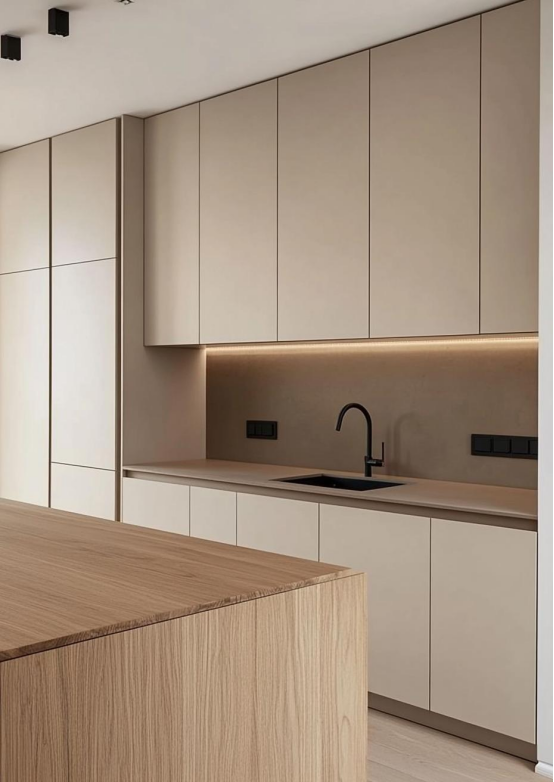
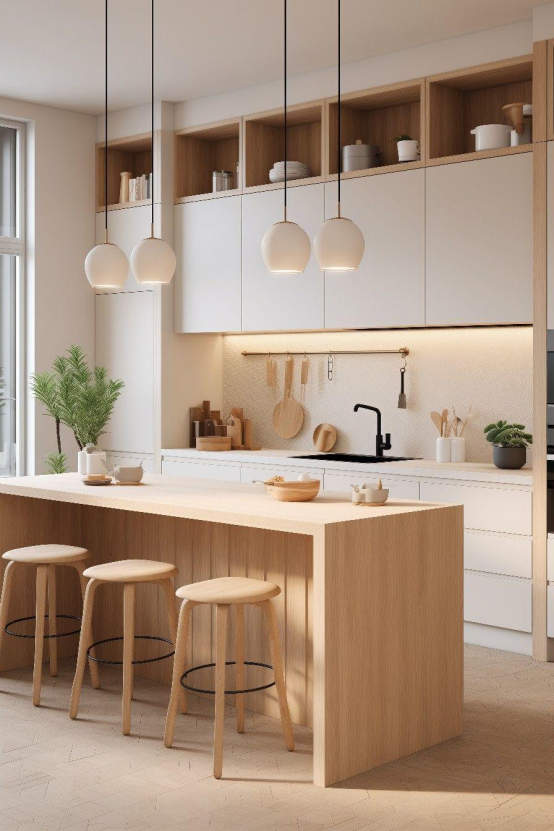
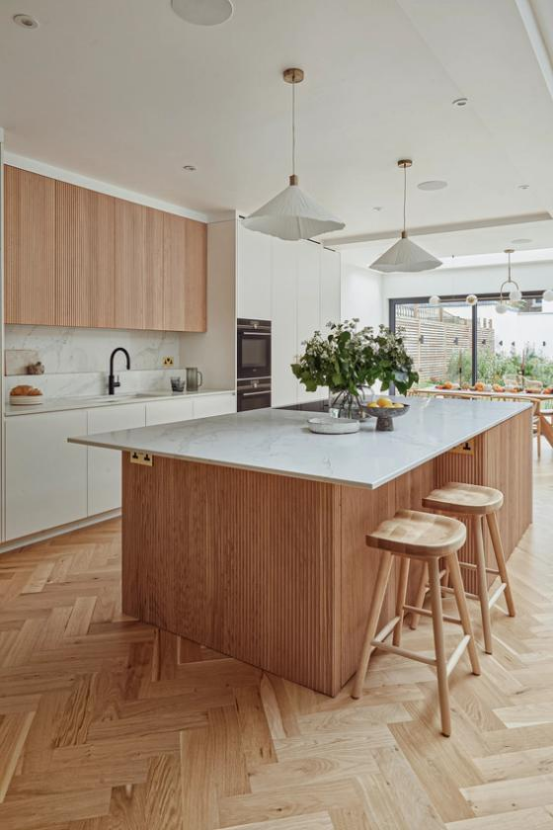
3. Clean Lines and Simplicity
One of the defining features of minimalist kitchen design is simplicity.
In a Japandi kitchen, you’ll often find:
- Flat-panel cabinets
- Handleless doors
- Hidden storage
- Integrated appliances
- Simple lighting fixtures
Every element should feel intentional.
4. Functional Design
Function always comes before decoration.
Before adding any item, ask:
Does this serve a purpose?
This principle helps prevent clutter and keeps the kitchen visually calm.
5. Connection to Nature
Nature plays a major role in Japandi interior design.
You can incorporate it through:
- Large windows
- Indoor plants
- Natural wood
- Stone surfaces
- Organic textures
Even a small potted olive tree or eucalyptus branch can make a difference.
Japandi Kitchen Design Ideas
If you’re planning a renovation or simply looking for inspiration, these minimalist kitchen design ideas can help.
White Oak Cabinets
White oak is one of the most popular materials in Japandi kitchens.
Why it works:
- Warm appearance
- Durable
- Timeless
- Pairs beautifully with neutral colors
White oak cabinets instantly create the signature Japandi look.
Waterfall Kitchen Islands
A waterfall island creates a clean and elegant focal point.
Choose:
- Quartz
- Marble
- Light stone
The seamless lines perfectly complement Japandi aesthetics.
Open Shelving Done Right
Unlike traditional open shelving filled with decorations, Japandi shelves remain carefully curated.
Display only:
- Handmade ceramics
- Wooden bowls
- Neutral dishes
- Small plants
Less truly is more.
Hidden Appliances
Integrated appliances help maintain visual simplicity.
Consider:
- Panel-ready refrigerators
- Built-in dishwashers
- Concealed range hoods
- Appliance garages
The result is a cleaner, more harmonious space.
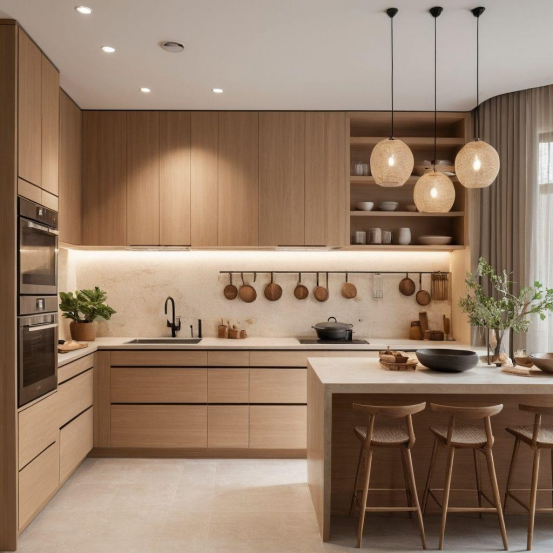
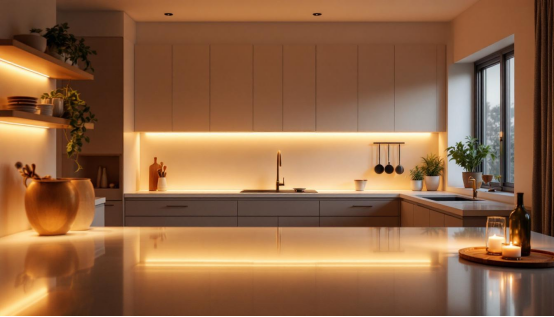
Soft Ambient Lighting
Lighting should feel warm and natural.
Popular choices include:
- Pendant lights
- Recessed lighting
- Under-cabinet LED strips
- Paper lantern-inspired fixtures
Avoid harsh, bright lighting whenever possible.
What Is Japandi Decor?
Many homeowners ask, “What is Japandi decor?”
Japandi decor focuses on quality, craftsmanship, and simplicity.
Instead of filling shelves with accessories, choose a few meaningful pieces:
Examples
- Handmade pottery
- Wooden serving boards
- Linen textiles
- Sculptural vases
- Minimal wall art
- Natural woven baskets
The goal is to create visual interest without creating clutter.
The Role of Japandi Art
Japandi art follows the same philosophy as the overall design style.
Popular choices include:
- Abstract line drawings
- Botanical prints
- Japanese ink paintings
- Nature-inspired photography
- Minimal black-and-white artwork
Avoid overly colorful or busy pieces that compete with the room’s calming atmosphere.
Small Japandi Kitchen Ideas
You don’t need a large kitchen to achieve this look.
For small spaces:
~ Use Light Colors
White, cream, and beige make the room feel larger.
~ Maximize Natural Light
Avoid heavy window coverings.
~ Choose Multi-Functional Furniture
Every item should serve a purpose.
~ Keep Countertops Clear
Visible clutter quickly disrupts the Japandi aesthetic.
~ Use Vertical Storage
Take advantage of wall space with simple shelving and concealed storage.
Common Japandi Kitchen Mistakes
Many people misunderstand the style.
Avoid these common mistakes:
1. Going Too Minimal
A Japandi kitchen should feel warm, not empty.
2. Using Too Many Colors
Stick to a restrained palette.
3. Ignoring Texture
Wood, stone, linen, and ceramics add depth and interest.
4. Overdecorating
Decor should enhance the space, not dominate it.
5. Choosing Trendy Finishes
Focus on timeless materials rather than short-lived trends.
How to Create a Japandi Kitchen on a Budget
You don’t need a complete renovation.
Start with:
- Decluttering countertops
- Replacing cabinet hardware
- Adding wood accents
- Switching to warm lighting
- Incorporating neutral accessories
- Displaying handmade ceramics
- Using natural textiles
Small changes can dramatically transform the feel of your kitchen.
Why Japandi Style Works So Well in Modern Home
The popularity of Japandi interior design isn’t just about appearance.
It reflects a broader shift toward:
- Intentional living
- Sustainability
- Mindfulness
- Functionality
- Quality craftsmanship
A Japandi kitchen isn’t merely a design trend—it’s a lifestyle choice that prioritizes calm, comfort, and simplicity.
Final Thoughts
A Japandi kitchen combines the best aspects of Japanese and Scandinavian design to create a space that is functional, beautiful, and timeless. By focusing on natural materials, neutral colors, thoughtful organization, and purposeful decor, you can transform any kitchen into a peaceful retreat.
Whether you’re planning a full renovation or looking for simple minimalist kitchen design ideas, the Japandi approach offers an elegant solution that balances beauty with practicality.
The result is a kitchen that feels warm, inviting, and perfectly suited to modern living.
Frequently Asked Questions
1. What is a Japandi kitchen?
A Japandi kitchen combines Japanese minimalism and Scandinavian functionality. It features natural materials, neutral colors, clean lines, and clutter-free organization.
2. What colors are used in Japandi kitchens?
Popular Japandi colors include warm white, beige, cream, taupe, gray, charcoal, and natural wood tones.
3. Is Japandi the same as minimalist design?
Not exactly. While both focus on simplicity, Japandi adds warmth, texture, and natural materials that make spaces feel more welcoming.